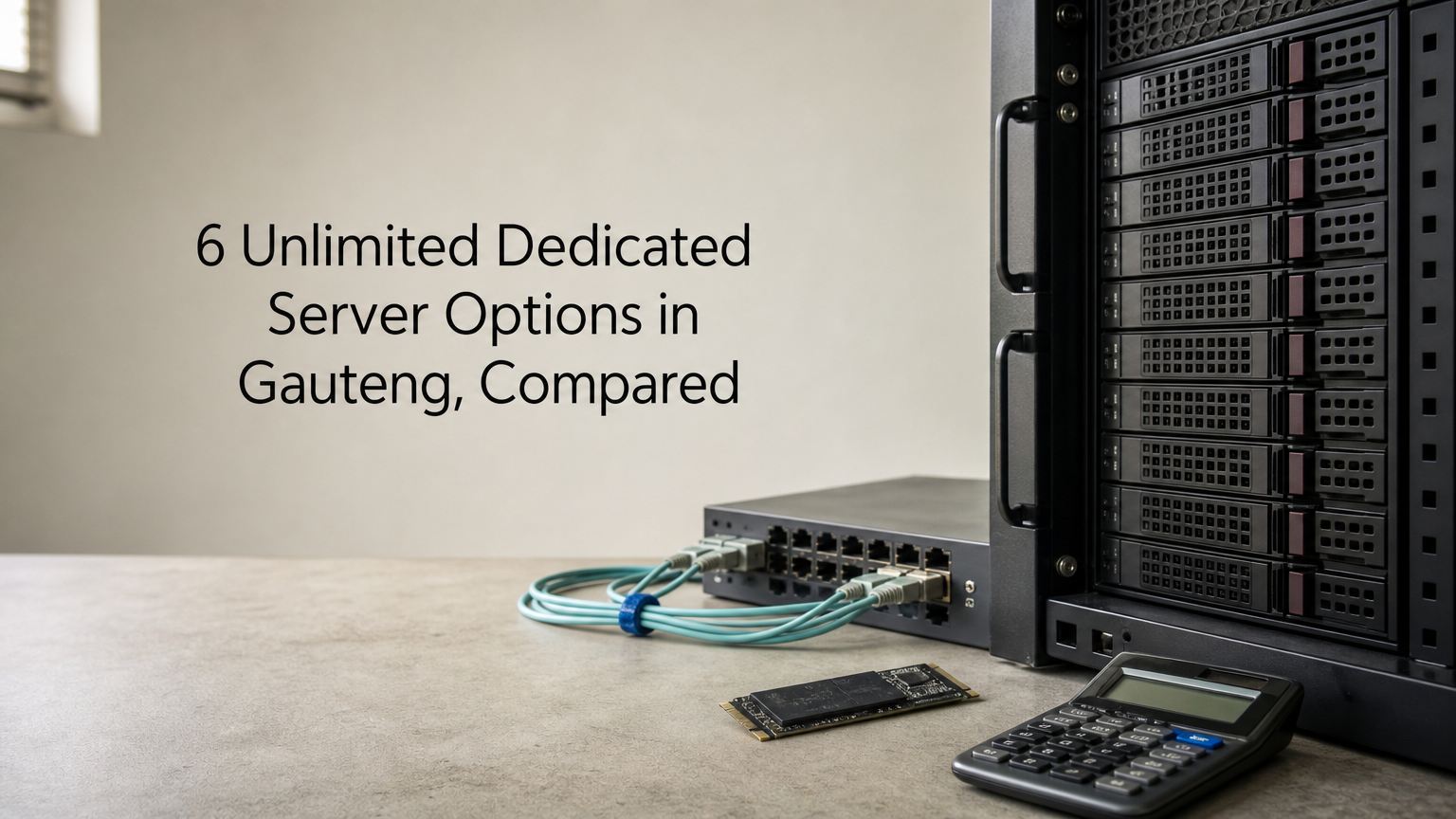
A good unlimited dedicated server in Gauteng has four things in writing: no monthly data cap on the exact plan you are ordering, a data centre you can name, hardware sized for your workload, and a rand price you can budget for over twelve months. Of the six options below, QuikeFix suits buyers who need high core counts and NVMe storage. Truehost and Host Africa suit tight budgets. HostCow suits buyers who want NVMe at entry level. Register Domain SA suits teams that want managed eight-core hardware. Datapacket suits buyers who want a named Johannesburg facility.
Most providers print "unlimited" in the plan header and then put the limits elsewhere. Some cap only certain models, some apply fair-use rules, and some quote in dollars while you pay in rand. Comparing them takes longer than it should, and a wrong pick means a migration later.
QuikeFix sells dedicated servers alongside managed IT and hosting, so we list our own range first and hold it to the same tests as the rest. Figures for other providers come from their published listings. Prices and terms change, so confirm every one on the live order page before you pay.
What unlimited and unmetered bandwidth really mean
On a dedicated server, "unlimited" and "unmetered" mean the same thing: the provider does not count your monthly transfer or bill you for overage. They do not mean unlimited speed. Your port speed still sets the ceiling.
Unlimited, unmetered and capped: the difference
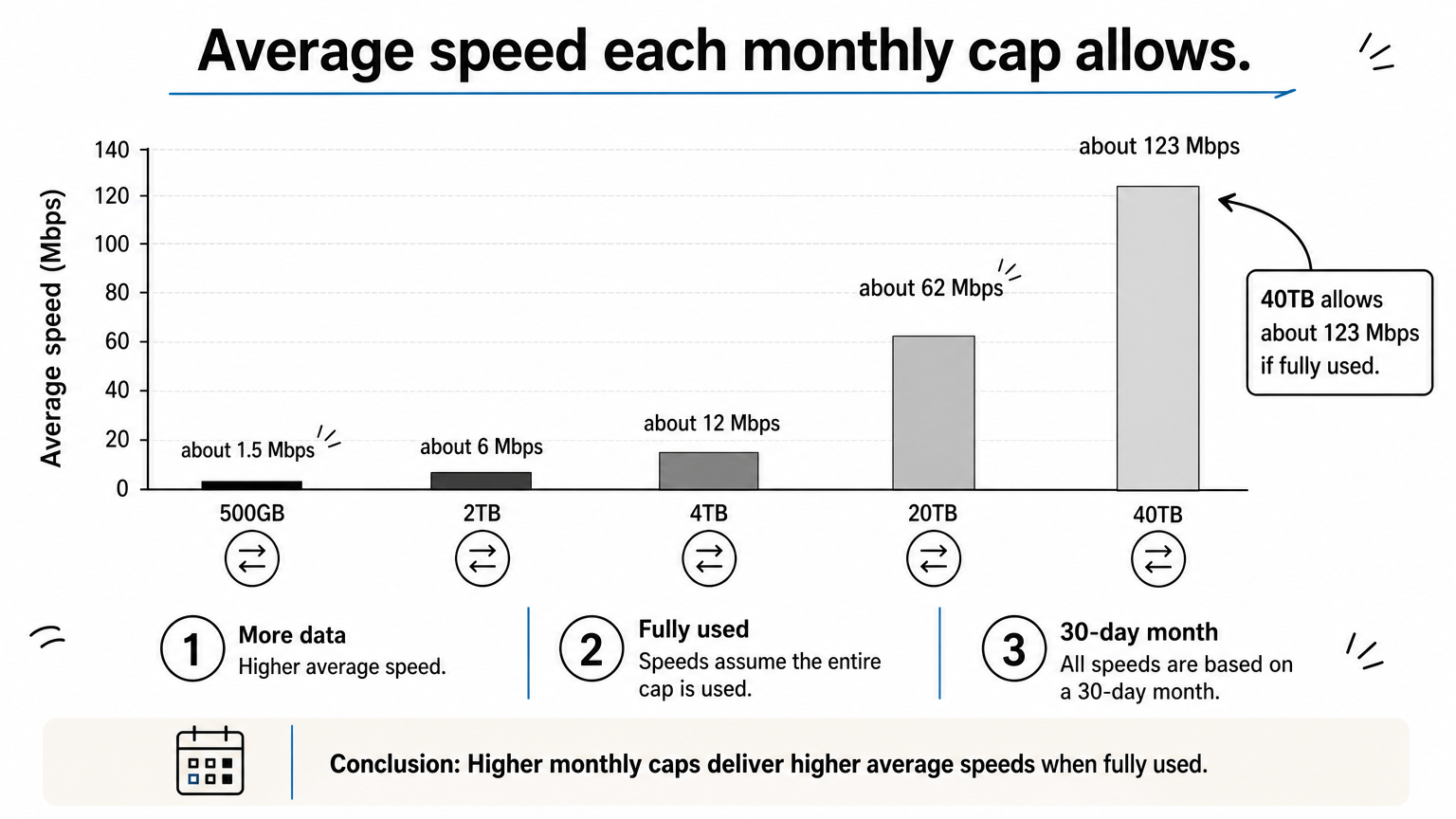
A search for a dedicated server unmetered plan returns two kinds of offer. One has no cap at all. The other has a large cap, such as 20TB or 40TB, which providers sometimes market loosely as "unlimited". The table shows what each cap means as an average speed if you used all of it, assuming a 30-day month.
| Monthly cap | Average speed if fully used |
|---|---|
| 500GB | about 1.5 Mbps |
| 2TB | about 6 Mbps |
| 4TB | about 12 Mbps |
| 20TB | about 62 Mbps |
| 40TB | about 123 Mbps |
A site that streams video, serves large downloads or syncs backups around the clock can pass 62 Mbps without trouble. A typical business application server uses a fraction of that. Work out your own average before you pay a premium for unmetered transfer.
Unmetered removes the data cap, not the speed limit of the port.
Fine print to check before you order
Ask about the port speed first. A 1 Gbps port can move roughly 324TB in a month at full tilt, so "unmetered" on that port is generous but not infinite. Then read the acceptable use or fair-use policy, because some providers reserve the right to throttle sustained heavy use.
Next, confirm that the unmetered claim covers your exact model. Within a single provider’s catalogue, some servers are unmetered and others carry 20TB or 40TB caps. Finally, ask where the server physically sits. If you serve customers in Johannesburg or Pretoria, a Gauteng data centre keeps the route short, and any dedicated server hosting with unlimited bandwidth is worth more when the box is close to your users.
1. QuikeFix unmetered dedicated servers
QuikeFix lists four dedicated servers with unmetered bandwidth, from a 16-core AMD EPYC to a dual-socket 128-core build. They are aimed at buyers who want large NVMe storage and plenty of RAM.
Specs and price
Prices below are indicative rand conversions of the portal’s dollar prices at USD 1 = ZAR 16.52, as of 4 August 2026. The live billing portal sets the final price, billing cycle, setup fees and tax.
| Server | Cores and speed | RAM | Storage | Bandwidth | From (per month) |
|---|---|---|---|---|---|
| AMD EPYC 7302P | 16 at 3.0GHz | 128GB | 2 x 2TB NVMe | Unmetered | R3,303.83 |
| AMD EPYC 7742 | 64 at 2.25GHz | 256GB | 2 x 4TB NVMe | Unmetered | R4,129.83 |
| Dual Intel Xeon Platinum 8260 | 48 at 2.4GHz | 384GB | 4 x 2TB NVMe | Unmetered | R4,955.83 |
| Dual AMD EPYC 7742 | 128 at 2.25GHz | 512GB | 4 x 4TB NVMe | Unmetered | R5,781.83 |
Two cheaper models are capped, so do not confuse them with the list above. The Intel Xeon Gold 6130 (R2,808.23) carries 40TB of bandwidth and the Intel Xeon E5-2670 (R2,477.83) carries 20TB. There is also a custom build from R6,607.83, with up to 128 cores, up to 1TB RAM and custom bandwidth, so confirm its bandwidth terms in writing.
If you need unmetered transfer at QuikeFix, choose one of the four NVMe models, not the capped Xeon units.
Who it suits
The EPYC 7302P fits databases, application servers and busy WordPress or e-commerce estates that value fast single-thread speed. The 64-core and dual-socket models suit virtualisation hosts, where you carve one box into many virtual machines, and heavy automation or analytics workloads.
Before ordering, confirm the data-centre location, operating system, management level, backups, IP addresses, software licences, provisioning time and migration plan. QuikeFix will review a configuration or quote a custom spec, which helps if you are moving from a managed host and need the cutover planned.
2. Host Africa managed dedicated server
Host Africa offers the cheapest unlimited-traffic managed dedicated server in a recent South African price comparison, at R1,500 a month. It is a sensible entry point if you want someone else to run the box.
Specs and price
The managed product has 4 cores and 1TB of SSD storage (2 x 500GB) with unlimited monthly traffic. Only one other provider in that comparison matched the unlimited allowance. RAM was reported inconsistently across the source, so check it on the order page.
Host Africa also sells self-managed Linux options. A Linux virtual dedicated server starts at R1,080 a month and the Metal Core Linux 8 at R2,340 a month. A virtual dedicated server shares physical hardware, so it is not the same as bare metal, and bandwidth terms for these plans should be confirmed separately.
The R1,500 managed plan is the one to price against; the self-managed tiers need their bandwidth terms checked.
Who it suits
This plan suits small businesses that want a stable, managed server for a website, mail or a line-of-business application and do not need big storage. A managed server means the provider handles patching and monitoring, which matters if you have no sysadmin.
It is a weaker fit for heavy databases or virtualisation. Four cores and 1TB of SSD run out quickly there, and you would pay more later to move up.
3. HostCow basic dedicated server
HostCow’s Basic dedicated server starts at R2,299 a month with unlimited bandwidth and NVMe storage. It is the cheapest NVMe-based unlimited option on this list.
Specs and price
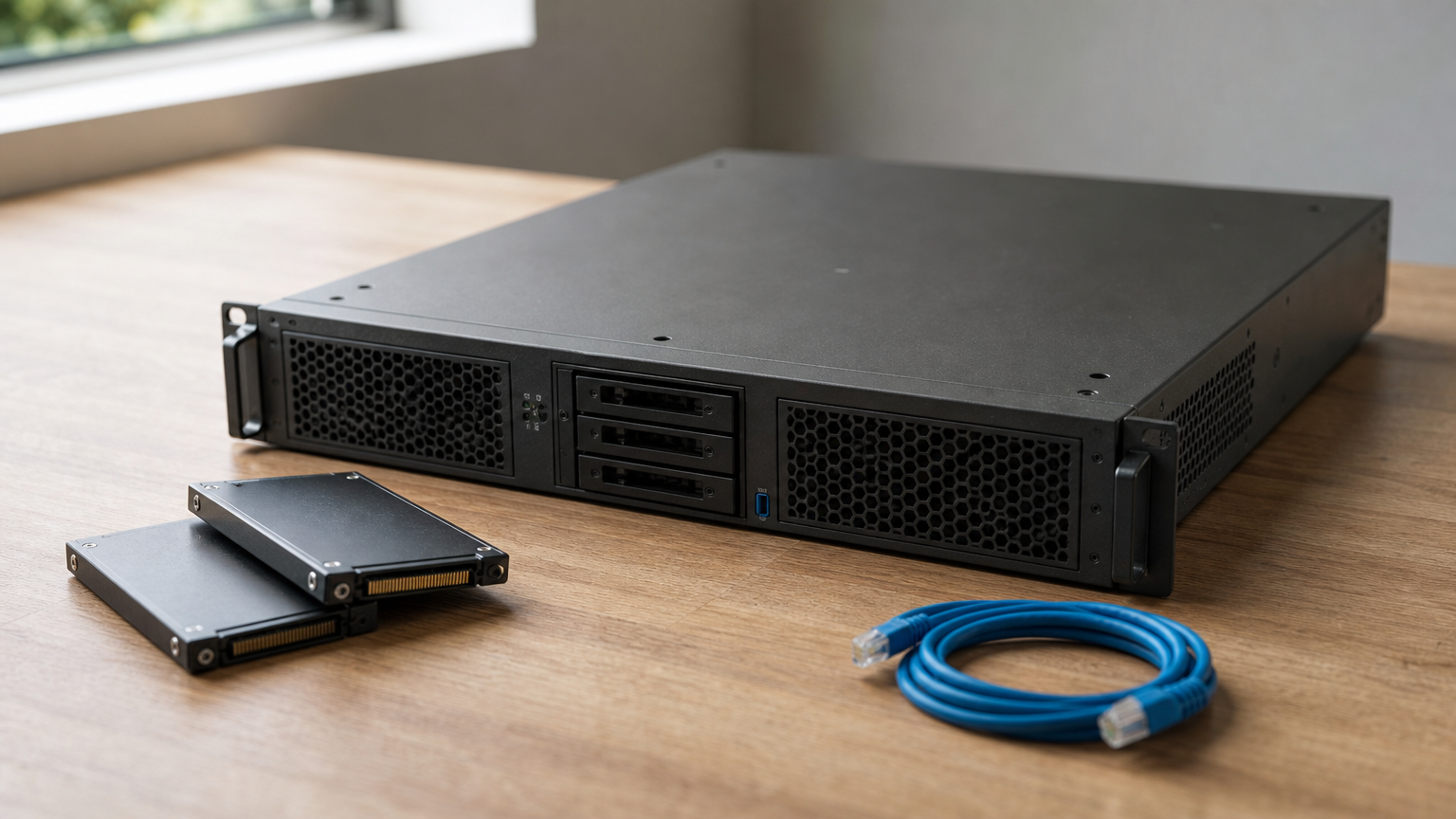
The listing shows 2 x 512GB enterprise NVMe storage, 16GB of RAM and a CPU with 4 cores and 8 threads. Bandwidth is listed as unlimited. Software licences are priced separately on many Windows-capable servers, so ask what the R2,299 includes.
Twelve months at the listed price comes to R27,588 before tax, setup fees or licences. That compares with R35,988 for Register Domain’s eight-core managed plan, which has more cores but slower HDD storage.
NVMe at R2,299 is the draw here, as long as 16GB of RAM is enough for you.
Who it suits
HostCow suits developers, agencies and small online shops that want fast disk performance and unlimited transfer without paying for a big server. NVMe cuts database query and page-build times noticeably compared with spinning disks.
Skip it if you need more than 16GB of RAM or large storage. Both would push you to a higher tier or a different provider.
4. Register Domain SA managed dedicated server
Register Domain SA sells a managed dedicated server with the most cores in a published South African comparison, and unlimited monthly traffic, at R2,999 a month. It targets buyers who want eight cores and hands-off management.
Specs and price
The plan has 8 cores, 16GB of RAM and 2TB of HDD storage (2 x 1TB), and the provider does not meter monthly traffic. It was the most expensive plan in that comparison, which counted six South African providers. Over 12 months it adds up to R35,988 at the listed price.
The storage is spinning disk, not SSD. That is fine for file storage, backups and archives. It is slower for databases and busy dynamic sites.
You pay for core count and management here, not for storage speed.
Who it suits
It suits businesses that run CPU-heavy tasks such as report generation, batch processing or application servers, and want the provider to manage the operating system. Eight cores give you headroom for several services at once.
If your workload is read-heavy and disk-bound, spend the same money on an NVMe server with fewer cores, such as the HostCow or QuikeFix EPYC 7302P options.
5. Truehost dedicated servers
Truehost has the lowest entry price on this list, from R1,040 a month, and advertises unlimited bandwidth on its dedicated plans. Hardware specifications for each tier are not published on the page we reviewed, so confirm them first.
Specs and price
Truehost lists three tiers: Starter at R1,040, Pro at R1,600 and Elite at R1,920 a month. It says plans include SSD storage, free SSL certificates, daily backups, DDoS protection, 24/7 support and a 99.9% uptime target, with managed options for buyers who are not technical. It puts the typical South African price range at R1,000 to R12,000 a month depending on specification.
The Starter plan over 12 months costs R12,480 at the listed price. Because the CPU, RAM and disk for each tier were not visible, treat that figure as a starting point and confirm what the money buys.
Truehost is the cheapest way in, but the plan specs decide whether it is actually the best deal.
Who it suits
Truehost suits small stores, blogs and business sites that outgrew shared hosting and want a first dedicated server on a small budget. The managed options help if you do not have in-house IT.
Ask for a written specification, the data-centre location and the unmetered terms for the specific tier. Those three answers separate a bargain from a plan that only looks like one.
6. Datapacket Johannesburg dedicated servers
Datapacket places dedicated servers in a named Gauteng facility: the carrier-neutral JB1 Teraco data centre on the Isando campus in Johannesburg. It suits buyers who care most about where the server lives and how it connects.
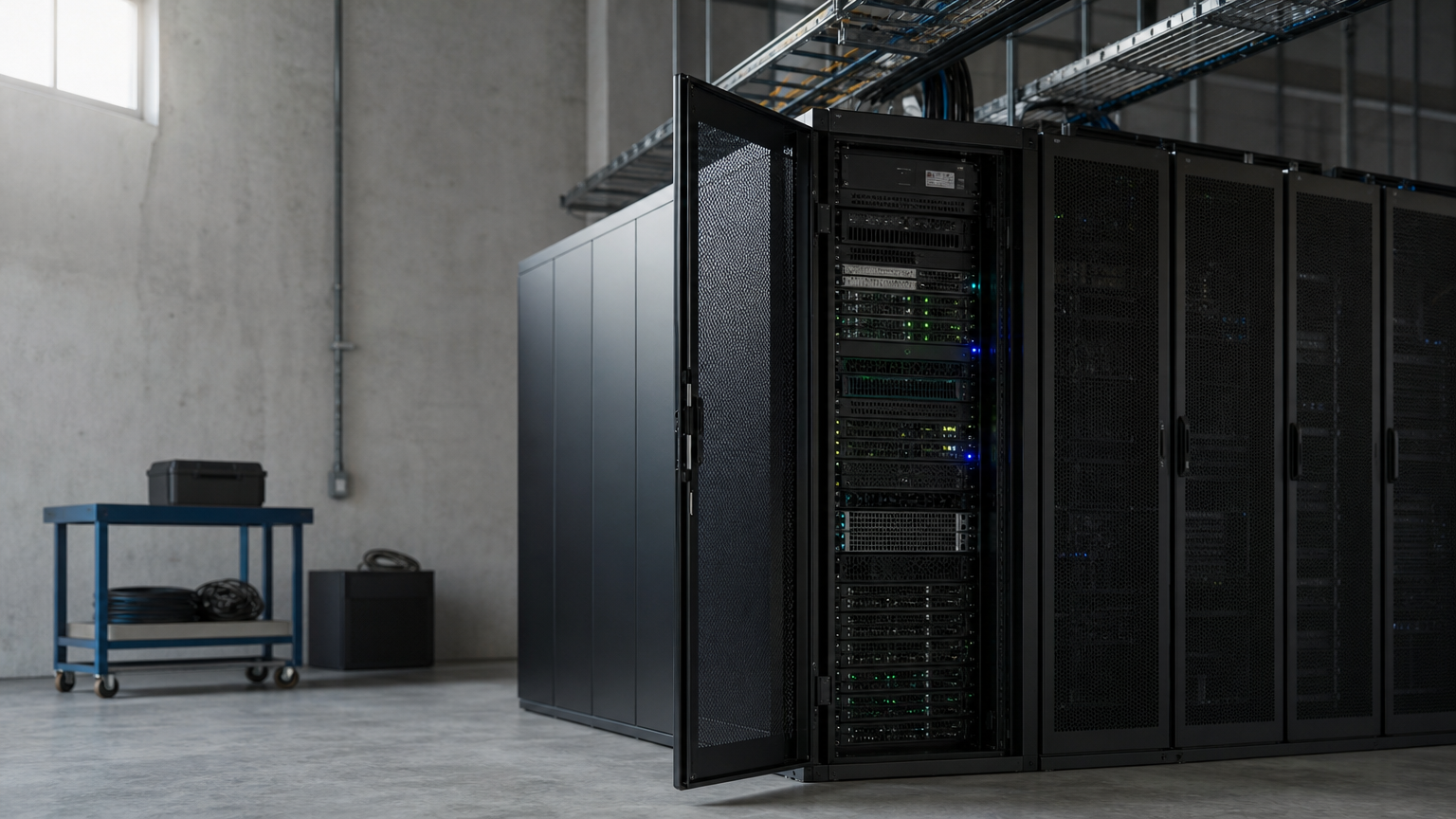
Specs and price
Datapacket states a 99.999% uptime SLA for its Johannesburg location. Carrier-neutral means you are not locked to a single network, which helps with routing and redundancy. Pricing and hardware vary by configuration, and I could not verify bandwidth terms on its Johannesburg page, so check the exact plan.
Ask three questions before ordering: is the bandwidth unmetered on this configuration, what is the port speed, and in which currency will you be billed. Dollar billing means your rand cost moves with the exchange rate.
Datapacket is the strongest answer to "where does my server physically sit?", provided the bandwidth terms are unmetered.
Who it suits
It suits technical teams that run their own servers and want a Johannesburg location for latency, peering or compliance conversations. A named facility with an uptime SLA is easy to put in a risk register.
It is less suited to buyers who want a managed rand-priced service with local hand-holding. For that, a local managed plan from Host Africa, Register Domain or QuikeFix is simpler.
How to choose and compare your options
Pick on workload first, then on bandwidth terms, then on price. The table sets the published prices side by side, with twelve months of cost at the listed monthly price, before tax, setup fees or licences.
Side-by-side comparison
| Option | Per month | 12 months | Bandwidth | Listed hardware |
|---|---|---|---|---|
| Truehost Starter | R1,040 | R12,480 | Unlimited (advertised) | Confirm on order page |
| Host Africa managed | R1,500 | R18,000 | Unlimited | 4 cores, 1TB SSD |
| HostCow Basic | R2,299 | R27,588 | Unlimited | 4 cores/8 threads, 16GB, 2 x 512GB NVMe |
| Register Domain SA | R2,999 | R35,988 | Unlimited | 8 cores, 16GB, 2TB HDD |
| QuikeFix EPYC 7302P | R3,303.83 | R39,645.96 | Unmetered | 16 cores, 128GB, 2 x 2TB NVMe |
| QuikeFix EPYC 7742 | R4,129.83 | R49,557.96 | Unmetered | 64 cores, 256GB, 2 x 4TB NVMe |
Datapacket is left out because pricing varies by configuration. Prices from other providers come from published listings and may have changed.
A worked example for a typical buyer
Say you run a Pretoria-based video training site that averages 100 Mbps of outbound traffic. That is about 32.4TB a month, so a 20TB server is out and a 40TB server leaves almost no headroom. You need an unmetered plan.
If the site is read-heavy and database-driven, NVMe matters more than core count, so the HostCow Basic or the QuikeFix EPYC 7302P fits. If you want hands-off management, Host Africa’s R1,500 managed plan is the cheaper way to get unlimited traffic, though with less storage. If you plan to host several virtual machines, the 64-core EPYC gives you room to grow.
Work out your average monthly transfer first, because it decides whether you need unmetered at all.
Making the final call
An unlimited dedicated server is only as good as the terms behind it. Check that the exact plan is unmetered, confirm the port speed and the Gauteng data centre, and match the hardware to your workload before you compare prices. For budget and managed simplicity, look at Truehost or Host Africa. For NVMe at entry level, look at HostCow. For high core counts, big NVMe storage and a provider that also handles managed IT, the QuikeFix range is built for that.
If you want a second opinion on sizing, bandwidth and migration, request a configuration review from QuikeFix and we will help you match one of our dedicated servers to your workload.